
Anti-Tarnish 101
Is Anti-Tarnish Jewellery Waterproof? What Water Really Does to It
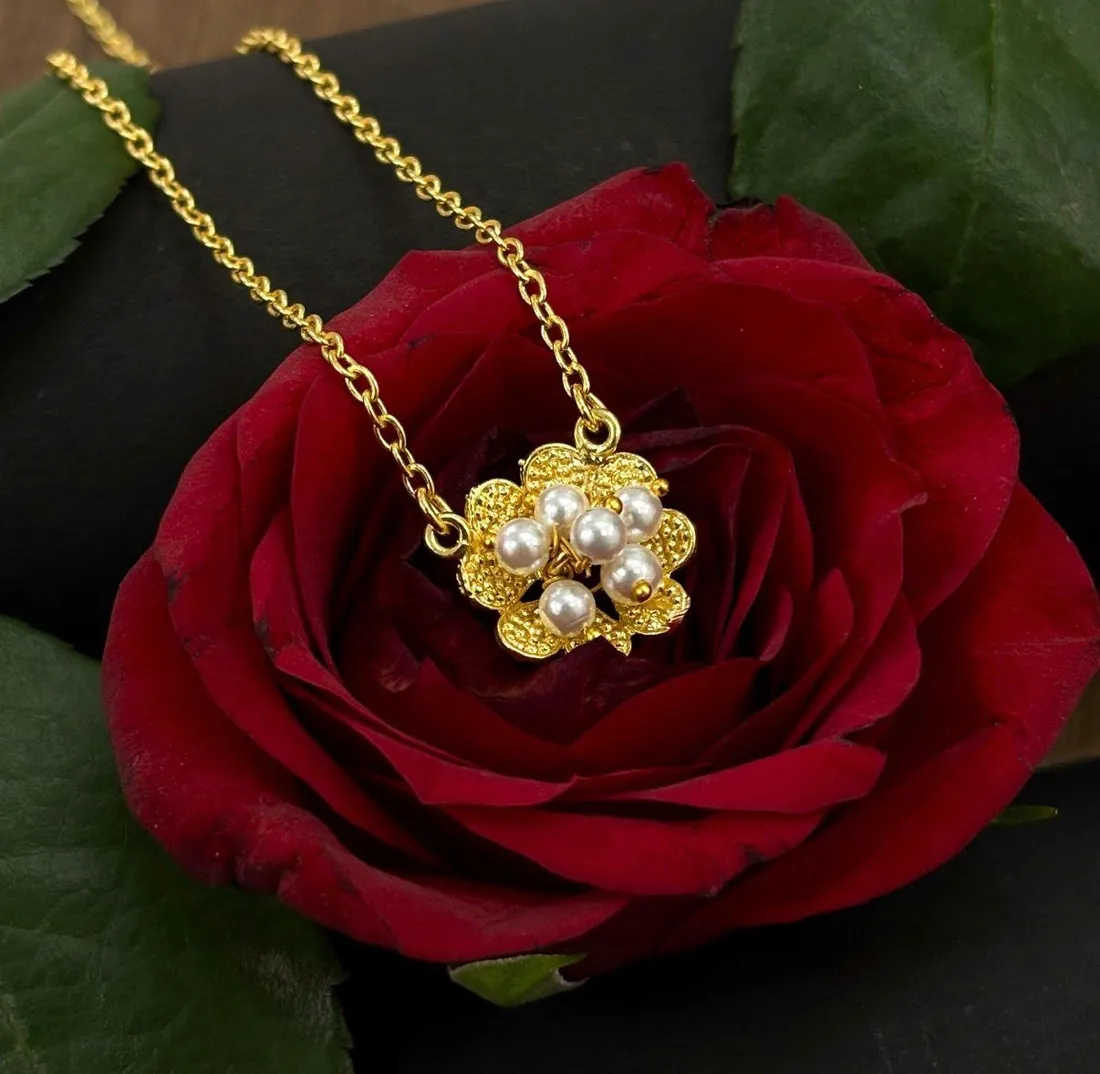
No. Anti-tarnish jewellery is water resistant, not waterproof. The coating is built to hold off air, humidity and sweat, which is what makes metal tarnish. It is not built for immersion. Rain, hand washing and a splash are fine. Chlorinated pools, sea water and a daily hot shower wear the coating down, and once it thins, the base metal starts reacting again.
That distinction is the whole post, and it is worth understanding properly, because “waterproof” is the most oversold word in the fashion jewellery aisle.
Is anti-tarnish jewellery waterproof?
It is not, and the word itself is the problem.
Look at the one trade next door that actually tests for this. Watches have a published international standard, ISO 22810, Horology: Water-resistant watches, which as ISO explains “clarifies the terms used, defines the criteria to be met by the product and specifies the marking which may appear on the product”. Notice the term it standardised: water resistant, not waterproof. A watch rated water resistant to 30 metres means the case should not leak during aquatic activities down to that depth, and ISO’s point is that a watch sold as water-resistant must satisfy the standard “regardless of the brand”.
Jewellery has no equivalent. There is no published test a necklace has to pass before a brand may print “waterproof” on the product page. So when you see it, treat it as a marketing adjective, not a measurement.
What anti-tarnish genuinely is: a protective coating (often an e-coating or a rhodium or PVD style finish) sealed over the plated surface so oxygen, humidity and sweat cannot reach the base alloy. We unpack the full mechanism in what is anti-tarnish jewellery. That coating is a barrier, and every barrier has a lifespan.
What does water actually do to anti-tarnish jewellery?
Different water does different damage. Here is the honest breakdown.
| Water situation | What it does to the coating | Verdict |
|---|---|---|
| Rain, a splash, washing hands | Nothing, if you dry it soon after | Safe |
| Sweat from a normal day | Salty and mildly acidic, but a coating handles it | Safe |
| Daily hot shower with soap | Heat plus surfactants lift and thin the coating over time | Avoid |
| Chlorinated swimming pool | Chlorine attacks jewellery alloys directly | Remove it |
| Sea water | Dissolved salt drives pitting in clasps and settings | Remove it |
| A gym session, then straight into a bag | Sweat sits on the metal for hours | Wipe it dry first |
| Soaking in a bowl to “clean” it | Water gets into settings and stays there | Never |
The pattern is simple. Brief contact is survivable. Standing water and chemistry are not.
What does chlorine do to jewellery?
It corrodes the metal, and this is not a jewellery-blog opinion. The Gemological Institute of America states plainly that “fine jewelry should be removed before diving into a chlorinated swimming pool”, and that “chlorine bleach, another common household solvent, can pit or damage gold alloys”. If chlorine pits solid gold alloy, a micron-thin plated layer over brass has no chance.
And pool water is chlorinated on purpose, continuously. The US Centers for Disease Control and Prevention recommends a free chlorine concentration of at least 1 ppm in pools and at least 3 ppm in hot tubs, held there for the water to stay safe. A hot tub is the worst case of all: more chlorine, plus heat, which speeds every reaction up.
This is also why the plating question and the water question are the same question. Plating is measured in microns, and how long it survives depends almost entirely on what you expose it to, as we cover in how long gold plating really lasts.
Is sea water worse than pool water?
Different, and in some ways worse, because salt attacks the shape of jewellery rather than just its surface.
Dissolved chloride breaks down the passive film that protects steel, and it does that fastest in tight, sheltered gaps. The British Stainless Steel Association is blunt about it: 316 grades are used widely in marine applications, but “their corrosion resistance in contact with seawater is limited and they cannot be considered ‘corrosion proof’ under all situations”, because they are “susceptible to localised attack mechanisms, principally crevice and pitting corrosion”.
Now think about what a piece of jewellery is made of. Lobster clasps. Jump rings. Earring posts and backs. The seat under a stone. Chain links that overlap. Those are all crevices, and they are all places water sits after you leave the beach.
The BSSA guidance for seawater use also says stagnant conditions must be avoided and surfaces should be free draining. Translated into jewellery terms: it is not the swim that ruins the piece, it is the four hours afterwards with salt water trapped in the clasp.
Can you shower with anti-tarnish jewellery?
You can. You just should not make a habit of it, and the reason is soap more than water.
- Shampoo, conditioner and body wash are surfactants. Their entire job is to lift oil and film off a surface, and a protective jewellery coating is a film.
- Hot water accelerates chemical reactions, so a hot shower is harder on the finish than a cold rinse.
- Residue from conditioner and hard water leaves a dull grey haze in the recesses of a piece, which reads as tarnish even when the metal is fine.
- Strung pieces suffer most. Pearls sit on silk thread that stretches and holds dirt when wet, which is why our freshwater pearl guide says lay them flat to dry and never wear them in the shower.
The practical rule that costs you nothing: jewellery goes on last, after perfume, lotion and sunscreen, and comes off first, before the shower and the pool. That one habit does more for a piece’s lifespan than any product you can buy.
What should you do when jewellery does get wet?
It will happen. Here is the recovery, and it takes about a minute.
- Rinse it in clean fresh water. This matters most after the sea or a pool, because you are washing salt and chlorine off before they can concentrate as the water evaporates.
- Pat it dry with a soft, lint-free cloth. Work into the clasp, the back of the pendant and the earring posts.
- Let it air dry completely on a dry cloth before storing. Sealing a damp piece in a pouch traps humidity against the metal, which is the exact condition anti-tarnish coatings exist to prevent.
- Only then put it away, ideally in a closed pouch or box with a silica gel sachet. Our full routine is in how to care for anti-tarnish jewellery.
Never soak jewellery to clean it, and never leave it sitting in a bathroom, where humidity is highest in the house.
Does “waterproof jewellery” on a product page mean anything?
Sometimes, but you have to read past the word. Ask three questions.
- What is the base metal? Solid 316L stainless steel and titanium do not rust, so a piece made from the metal all the way through behaves very differently from a piece that is coated. If the listing will not say what is underneath, that is your answer.
- Is the colour plated or is it the metal itself? A gold tone on steel is still a surface layer, and surface layers wear. A steel-coloured steel piece has nothing to lose.
- Does the brand still tell you to take it off for swimming? Honest brands do, even the ones using the word waterproof. That contradiction tells you what the word is really worth.
Our comparison of what these material labels actually mean is worth reading before you spend, because “waterproof”, “non-tarnish” and “gold” are all doing heavy lifting on Indian marketplace listings right now.
So what is anti-tarnish actually for?
For the other 95% of a piece’s life.
Tarnish does not usually come from swimming. It comes from oxygen and humidity working slowly on an exposed alloy, from sweat on a July afternoon, from a piece left open on a dresser through a monsoon week. That is the problem an anti-tarnish coating is engineered to solve, and a good one solves it well. It buys you a necklace that still looks right after a year of daily wear, and it keeps the copper in the alloy away from your skin, which is what stops the green marks we explain in why artificial jewellery turns your skin green.
What it cannot do is make metal indifferent to chlorine, salt and hot soapy water. Nothing at this price does.
Buy for the coating, take the piece off before you get in the water, dry it when it gets wet anyway, and it will outlast every “waterproof” claim you were sold.
Good to know
Frequently asked questions
Is anti-tarnish jewellery waterproof?
No. Anti-tarnish is a coating that slows down oxidation from air, humidity and sweat. It is water resistant, so rain, hand washing and the odd splash will not hurt it. Repeated soaking, hot soapy showers, chlorinated pools and sea water all attack the coating from the outside, and once the coating thins the base metal underneath starts to react.
Can you shower with anti-tarnish jewellery?
You can, and nothing dramatic will happen on day one. But shampoo, conditioner, body wash and hot water strip the protective layer a little each time, and soap residue dulls the finish. Taking pieces off before you shower is the single cheapest way to make them last years instead of months.
Can you swim in anti-tarnish jewellery?
Take it off. Pool water is deliberately chlorinated, and chlorine attacks the metals used in jewellery alloys. Sea water is worse in a different way, because dissolved salt drives pitting and crevice corrosion in exactly the tight spots jewellery is full of, such as clasps, jump rings and earring posts.
What happens if my anti-tarnish jewellery gets wet?
Once is fine. Rinse it in clean fresh water, pat it dry with a soft cloth, and let it air dry fully before you put it away. The real damage comes from water that sits in a clasp or a stone setting for hours, not from a single splash that gets dried off.
Does waterproof jewellery exist at all?
Not in the sense the word suggests. Solid gold, platinum and titanium come closest because they do not corrode, and good 316L stainless steel is highly water resistant. But no plated or coated fashion piece stays untouched by water forever, and no jewellery standard defines waterproof the way the watch industry defines water resistance.