
Jewellery Care
How to Care for Anti-Tarnish & Artificial Jewellery So It Lasts
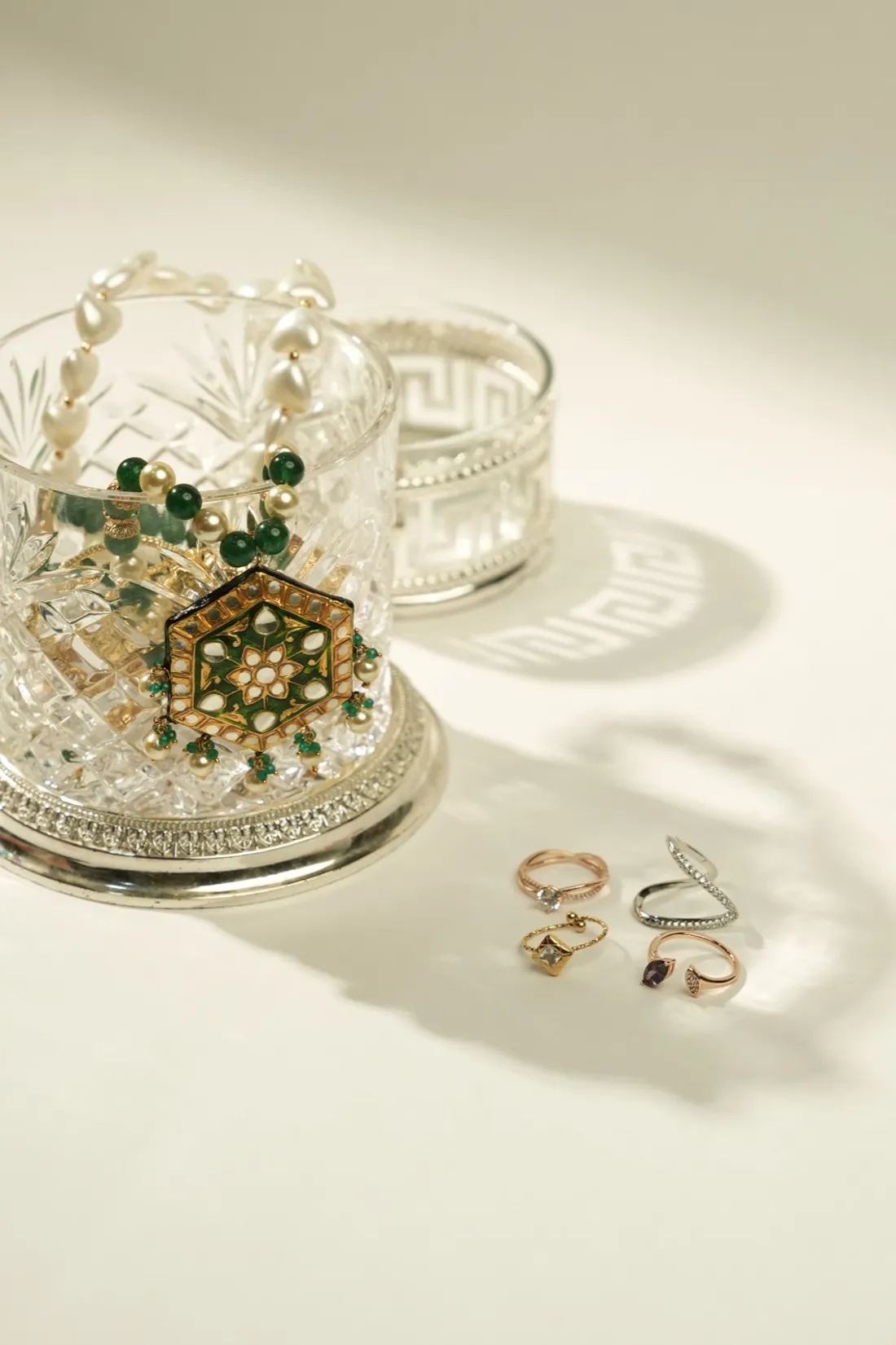
To make anti-tarnish and artificial jewellery last, the whole routine comes down to one idea: keep the metal away from moisture, chemicals and friction. Store each piece airtight and dry with a silica gel sachet, put jewellery on last (after perfume and lotion), keep it out of water, and wipe it with a soft cloth after wearing. Do that, and quality pieces stay bright for years instead of months.
Anti-tarnish coatings buy you time, but they’re not invincible. The good news is that the habits that protect them are simple and quick. Here’s the routine we recommend.
1. Store it airtight, dry, and separately
Air and moisture are what start tarnish, so your storage does most of the work. The advice jewellers repeat is consistent: store pieces in airtight zip-lock bags or a box with anti-tarnish strips, keep each piece separate to avoid scratching, and add silica gel sachets to absorb moisture, as summarised in this artificial jewellery storage guide.
- Give each piece its own pouch or compartment so they don’t rub and scratch.
- Drop one or two silica gel sachets into the box or bag; replace them every few months (you can even dry and reuse them).
- Store somewhere cool and dark, not the bathroom shelf or a sunny windowsill, where humidity and heat speed up tarnish.
2. Put it on last, take it off first
Your daily order of operations matters more than people expect.
Perfume, deodorant, lotion and hairspray are full of alcohol and chemicals that react with the coating and dull the shine. Jewellery goes on after they’ve dried, every time.
So: shower, moisturise, do your hair and makeup, spray perfume, let everything settle, then put your jewellery on. At the end of the day, it comes off first, before you wash your face.
3. Keep it away from water and sweat
Water is the enemy of a long-lasting finish. Even for pieces marketed as water-resistant, prolonged contact with water, and especially chlorinated pool water or salty sea water, wears the coating down faster.
- Take jewellery off before bathing, swimming, washing up or a heavy workout.
- If you’re caught in the rain or splashed, pat pieces completely dry before storing them. Trapped moisture is what turns a splash into a stain.
4. Clean it gently, and never with the harsh stuff
After each wear, a quick wipe with a soft, dry cloth removes the sweat and oils that would otherwise sit on the surface overnight. For a deeper clean, use a barely-damp soft cloth and dry immediately.
What to avoid, always: soaking, harsh soaps, toothpaste, baking soda and chemical “jewellery dip” cleaners. They’re made for solid precious metal and will strip the thin protective coating off artificial jewellery, doing more harm than the tarnish you were trying to remove.
5. Rotate what you wear
Wearing the same piece every single day gives its coating no rest and concentrates all the sweat and friction on one item. Rotating a few favourites spreads the wear and, honestly, makes getting dressed more fun.
A simple routine that takes seconds
You don’t need a ritual, just two small habits:
- After each wear: wipe the piece with a soft dry cloth and return it to its own pouch or compartment. Ten seconds.
- Once a month: check clasps and posts are secure, refresh or replace silica gel sachets, and give favourites a gentle barely-damp wipe followed by a thorough dry.
That’s the entire maintenance load for jewellery that keeps looking new.
Caring for jewellery when you travel
Travel is where finishes quietly get ruined, tossed into a wash bag, rubbing against each other in a humid suitcase. A little planning prevents it:
- Use a compartmented travel roll or a small box, not a loose pouch where pieces tangle and scratch.
- Drop in a silica gel sachet, especially for coastal or monsoon trips where humidity is high.
- Keep jewellery in your cabin bag, and still follow the on-last, off-first rule at the destination.
Can you revive a piece that’s gone dull?
Sometimes, if the coating is intact and the dullness is just surface residue, a gentle wipe with a soft, barely-damp cloth (then a thorough dry) can bring back shine. What you cannot safely do is “restore” a piece whose coating has worn through: polishes, dips and abrasives will only strip more of it away and expose the base metal. Once a coating is gone, the piece has reached the end of its life, which is the strongest argument for protecting the coating from day one.
How long should it last, realistically?
With this routine, a well-made anti-tarnish piece comfortably reaches the top of its natural range, one to three years of regular wear, often longer for pieces you wear occasionally and store well. If you want to understand why the coating matters so much, we explain it in what is anti-tarnish jewellery?; and if skin reactions are your worry rather than shine, read is artificial jewellery safe for sensitive skin?.
The one-minute version
Store it airtight and dry with silica gel. Put it on last, take it off first. Keep it out of water. Wipe it with a soft cloth; skip the harsh cleaners. Five small habits, and your jewellery keeps looking new far longer than the price tag would suggest.
Good to know
Frequently asked questions
How do I stop my artificial jewellery from tarnishing?
Keep it dry and away from air. Store each piece in an airtight bag or box with a silica gel sachet, take it off before bathing, swimming or workouts, and always put jewellery on last, after perfume, lotion and makeup have dried.
Can I wear anti-tarnish jewellery in water?
Occasional splashes are fine for quality anti-tarnish pieces, but you shouldn't shower, swim or wash dishes in them. Prolonged water and chlorine wear the coating faster. Take pieces off before any real contact with water.
How do I clean artificial jewellery at home?
Gently. Wipe pieces with a soft, dry cloth after each wear. For a deeper clean, use a barely-damp soft cloth and dry immediately, avoid soaking, harsh soaps, toothpaste and chemical jewellery dips, which can strip the coating.
Why does perfume damage artificial jewellery?
The alcohol and chemicals in perfumes and deodorants react with the metal's coating and dull its shine. Spray perfume first, let it dry fully, then put your jewellery on, the single easiest habit for making pieces last.
Does silica gel really help jewellery last longer?
Yes. Silica gel sachets absorb the moisture that drives tarnishing. Tuck one or two into your jewellery box or storage bag and replace them every few months, and you slow tarnish considerably.