Anti-Tarnish 101
What Is Anti-Tarnish Jewellery? (And Does It Really Not Tarnish?)
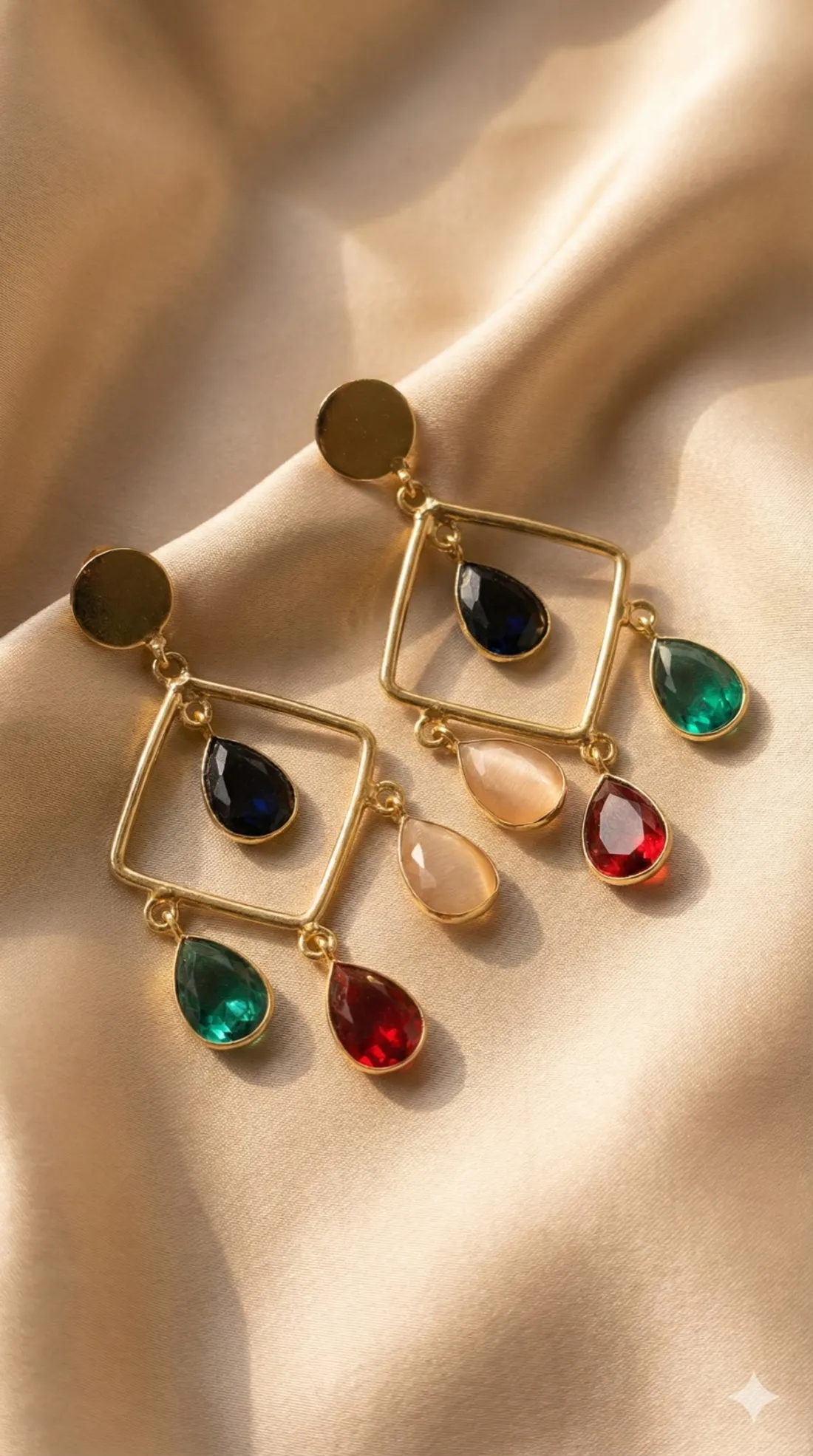
Anti-tarnish jewellery is artificial jewellery finished with a protective coating that resists tarnishing, the slow chemical reaction that turns ordinary fashion jewellery dull, black or green. It isn’t magic and it isn’t tarnish-proof, but a well-made anti-tarnish piece holds its shine for one to three years of regular wear, where an uncoated piece can fade in weeks.
If you’ve ever had a favourite pair of earrings go dull after a monsoon, or a ring leave a green mark on your finger, you’ve met tarnish. Anti-tarnish jewellery is the fix. Here’s what it actually is, how the coating works, and what’s realistic to expect.
What does “tarnish” actually mean?
Tarnish is oxidation. Base metals like brass and copper react with oxygen, moisture and the sulphur in sweat and air, forming a dull or dark layer on the surface. On skin, that same reaction can leave the familiar green or black mark.
Tarnish is not dirt, it’s a chemical reaction between the metal and its environment. You can’t scrub away the cause; you can only slow the reaction down.
That’s exactly what an anti-tarnish finish does: it puts a barrier between the reactive metal and the air, water and sweat that attack it.
How anti-tarnish jewellery is made
Almost all anti-tarnish jewellery starts with a base metal, commonly brass, a copper-zinc alloy, or stainless steel, and adds a protective finish on top. There are three common approaches:
- Electroplating, a thin layer of a more stable metal (like gold or rhodium) is bonded to the base electrically. It’s what gives “gold-plated” jewellery its colour and a first line of defence.
- E-coating (electrocoating), a clear, resin-based layer sealed over the metal. As one jewellery manufacturer’s guide puts it, e-coating exists to “improve durability, resist tarnish, and enhance colour longevity,” and it works over gold plating, silver and brass, according to Carat Island.
- PVD coating, physical vapour deposition, done in a vacuum chamber, creates an extremely hard, bonded layer. PVD finishes measure roughly 800 to 2000 HV in hardness versus 100 to 200 HV for ordinary gold plating, per TTT Jewelry, which is why PVD-coated steel is prized for waterproof, daily-wear pieces.
The base metal decides the look and weight; the coating decides how long the shine lasts. A good coating is the whole point of anti-tarnish jewellery.
So does it really not tarnish?
Honestly? Nothing is forever. But the difference is dramatic. A quality anti-tarnish piece “holds its colour for one to three years of daily wear instead of a few weeks”, and that gap is the entire reason the category exists.
What shortens the life of the finish is predictable: water, perfume, sweat, friction and rough storage. What extends it is equally simple, which is why we wrote a full guide on how to care for anti-tarnish and artificial jewellery so your pieces last at the top of that one-to-three-year range, not the bottom.
Anti-tarnish vs ordinary artificial jewellery
All anti-tarnish jewellery is artificial jewellery, but not all artificial jewellery is anti-tarnish. The cheap ₹99 pieces at a market stall are usually raw or lightly plated metal with no sealing coat, which is why they fade fast. Anti-tarnish pieces cost a little more because the coating and finishing are the expensive part.
If you’re weighing up what you’re actually buying, brass, alloy, gold-plated, “german silver”, our buyer’s guide to artificial, imitation and real jewellery breaks down every term you’ll see on a product page.
The colours and finishes you’ll see
Anti-tarnish is about longevity, not a single look. The same protective approach shows up across the finishes you’ll browse:
- Gold-tone, the classic warm finish, usually gold electroplating over brass, sealed to hold its colour. The most versatile for Indian outfits.
- Rose gold, a pinker plating; flattering and popular for daily-wear minimal pieces.
- Silver-tone / rhodium, a cool, bright finish; rhodium plating is naturally tarnish-resistant, which is why it’s common on “silver-look” fashion jewellery.
- Oxidised, the deliberately darkened, antique look for ethnic and festive pieces. Even oxidised finishes benefit from a sealing coat so the contrast doesn’t rub away.
The finish is a style choice; the coating underneath is the quality choice. Two gold-tone earrings can look identical in a photo and last very differently.
How to tell a piece is genuinely anti-tarnish before you buy
“Anti-tarnish” isn’t a regulated term, so treat it as a claim to verify, not a guarantee. Before you add to cart:
- Look for a named base metal. “Brass” or “316L stainless steel” is a good sign; a vague “alloy base” with no coating detail is a flag.
- Look for the coating named. Anti-tarnish, e-coating, gold-plated-and-sealed, or PVD, a brand that invests in the coating tends to say so.
- Check the wear claim. Honest brands talk in terms of months and years of colour retention, not “never tarnishes ever”.
- Read the returns policy. A fair returns window signals a brand that stands behind the finish.
- Scan the reviews for the word “green” or “faded”. Real buyers will tell you fast if a coating doesn’t hold.
Is anti-tarnish jewellery worth the extra cost?
Anti-tarnish pieces cost more than the cheapest market jewellery because the coating and finishing, the parts that make jewellery last, are exactly what a ₹99 piece skips. Spread across one to three years of wear, a well-made piece is usually cheaper per wear than replacing faded jewellery every few months, and it looks better the whole time. For anything you’ll actually wear often, it’s the better value.
Is it safe to wear every day?
For most people, yes, and a good anti-tarnish coating is part of why. Because the coating keeps the base metal from touching your skin directly, quality anti-tarnish jewellery is far less likely to cause the reactions people associate with cheap fashion jewellery. If you have sensitive skin or a known nickel allergy, it’s worth reading is artificial jewellery safe for sensitive skin? before you buy.
The short version
Anti-tarnish jewellery is artificial jewellery built to last: a base metal, a protective coating, and a finish that resists the oxidation that ruins ordinary pieces. Buy a well-made one, keep it dry and stored properly, and you get the look of precious jewellery, worn every day, for years, without the green marks.
Good to know
Frequently asked questions
Does anti-tarnish jewellery really never tarnish?
No piece is tarnish-proof forever. Anti-tarnish jewellery has a protective coating that dramatically slows the oxidation that dulls ordinary artificial jewellery, so a well-made piece holds its colour for one to three years of regular wear instead of a few weeks, especially with basic care.
What is anti-tarnish jewellery made of?
It's usually a base metal such as brass, copper alloy or stainless steel, finished with a protective layer, electroplating, an e-coating (a clear resin seal) or PVD coating, that shields the metal from air, moisture and sweat.
Is anti-tarnish jewellery the same as real gold?
No. Anti-tarnish jewellery is artificial (fashion) jewellery designed to look precious and last far longer than cheap imitation pieces, at a fraction of the price of solid gold. It is meant for everyday wear, not as an investment metal.
Why does my artificial jewellery turn my skin green or black?
That's oxidation, the base metal (often copper in the alloy) reacting with moisture, sweat and air, and leaving a residue on skin. A good anti-tarnish coating puts a barrier between the metal and your skin, which is why quality anti-tarnish pieces rarely cause this.
How long does anti-tarnish jewellery last?
With normal wear and simple care, keeping it dry, storing it airtight, expect roughly one to three years before the finish shows meaningful wear. Rough handling, perfume, water and sweat shorten that; careful storage extends it.