
Skin Safety
Why Does Artificial Jewellery Turn Your Skin Green? (And How to Stop It)
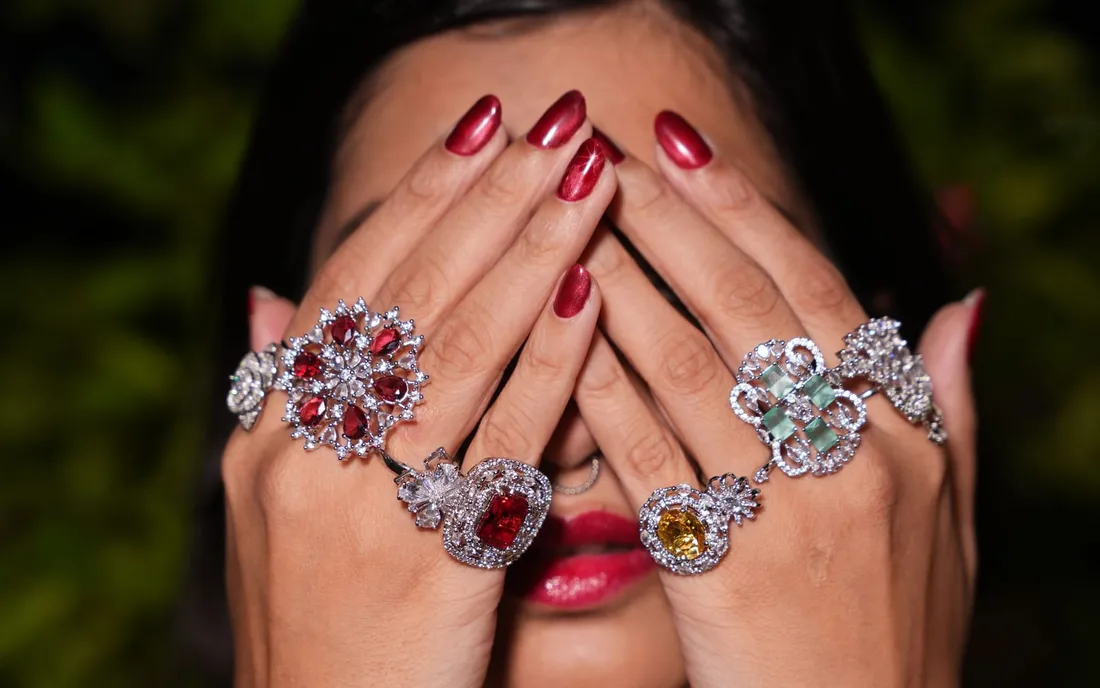
Artificial jewellery turns your skin green because of copper. When copper in the alloy meets the moisture, salt and oils in sweat, lotion or soap, it oxidises into copper salts, and those salts are green. They rub off onto your skin as a stain. It is a surface mark, not an allergy, it is harmless, and it washes off. A good anti-tarnish coating prevents it.
That is the short answer. The longer one is worth reading, because almost everything people believe about the green mark is wrong, including the part where it means the jewellery is cheap.
Why does artificial jewellery turn your skin green?
Think of the Statue of Liberty. It is copper, and it is green. The same chemistry is happening on your finger, just faster and on a smaller scale.
Dermatologist Jennifer Adams of Nebraska Medicine explains it plainly: the green colour comes from oxidation, a chemical reaction between copper and water or chemicals, and “the copper in the jewelry reacts with our sweat or lotion or other products.” She also notes that a lot of jewellery is built as copper underneath with silver or gold on top, which is exactly how most artificial jewellery is made.
Three things speed the reaction up:
- Sweat. It is salty and mildly acidic, which is close to ideal conditions for corroding copper.
- Products on your skin. Lotion, soap, sunscreen and perfume all give the metal something to react with.
- Humidity. Moisture in the air keeps the reaction going even when you are not sweating, which is why Indian summers and coastal cities are hard on jewellery.
Is the green stain dangerous?
No. This is the reassuring part.
The green residue “isn’t harmful and can be washed off your skin with soap and water,” per Nebraska Medicine. Genesis Healthcare System says the same and adds the removal method: soap and water first, and if that does not shift it, rubbing alcohol.
The key distinction: the stain is a reaction happening on the metal, and your skin is just the surface it lands on. Your body is not reacting to anything.
Green stain or allergic reaction: how do you tell them apart?
This matters, because the two get confused constantly and only one of them needs attention.
| Green stain | Allergic reaction | |
|---|---|---|
| What you see | Smooth green or grey-green tint | Redness, small bumps, dry or flaky patches |
| How it feels | Nothing at all | Itchy, sometimes sore or burning |
| Timing | Shows up the same day, often within hours | Builds over 12 to 48 hours of contact |
| Does it wash off? | Yes, with soap and water | No, it has to settle on its own |
| Usual cause | Copper in the alloy | Nickel in the alloy |
| What to do | Wash it, coat or replace the piece | Stop wearing it, see a doctor if it persists |
Nickel is the one worth taking seriously. It is the most common contact allergen there is, and the Nickel Institute reports that up to 15% of women and around 2% of men are sensitive to it. We covered that side of things in detail in is artificial jewellery safe for sensitive skin.
So: green and painless is chemistry. Red and itchy is your immune system. Different problems, different fixes.
Which metals turn skin green?
Any alloy with meaningful copper in it can leave a mark once the surface is exposed. Here is how the common jewellery bases compare.
| Base metal | Copper content | Green stain risk |
|---|---|---|
| Raw copper | 100% | Very high |
| Brass | Copper with up to about 45% zinc | High if uncoated |
| German silver (nickel silver) | 53% to 63% copper, plus nickel and zinc | High, and it carries nickel too |
| Sterling silver | 7.5% of the alloy, usually copper | Low to moderate |
| 316L stainless steel | None in the standard spec | Very low |
| Coated brass (anti-tarnish) | Copper base, but sealed away from skin | Very low while the coating holds |
Two things jump out. First, “german silver” contains no silver and plenty of copper, which is why it can stain and irritate. Our guide to artificial vs imitation vs real jewellery unpacks what these labels actually mean before you buy.
Second, and this is the myth worth killing: price is not the test. Genesis Healthcare System puts it directly, that “the price point of your gems isn’t the real issue,” and notes that certain silver jewellery does it too. Sterling silver is 92.5% silver and 7.5% other metal, and that other metal is usually copper. Spending more does not automatically buy you a copper-free piece. It is the coating, not the receipt, that decides whether copper ever touches your skin.
How do you stop jewellery from turning your skin green?
The whole strategy is one sentence: keep the copper away from your skin, and keep moisture away from the metal.
- Buy coated, not bare. A proper anti-tarnish or e-coating is a physical barrier between the alloy and your skin. This is the single biggest lever, and it is what anti-tarnish jewellery actually means.
- Put jewellery on last. After perfume, lotion, sunscreen and makeup have fully dried. Those products are half the reaction.
- Take it off for water and workouts. Showers, swimming, the gym, washing up. Sweat and chlorine strip coatings faster than anything else.
- Dry it after wearing. A quick wipe with a soft dry cloth removes the sweat film before it can sit overnight.
- Store it airtight. A zip bag or a closed box with a silica gel sachet keeps humidity off the metal. Our full routine is in how to care for anti-tarnish jewellery.
- Use clear nail polish as a stopgap. Both Nebraska Medicine and Genesis Healthcare System suggest a clear coat on the contact surface as a barrier. It works, but it wears off, so you have to reapply it every few weeks. Treat it as a rescue for a piece you love, not a plan.
If a piece that never stained suddenly starts, that is almost always the coating wearing through at the contact points, the inside of a ring band, the back of a pendant, the post of an earring. Nebraska Medicine’s suggestion for that is to have the piece recoated. For most artificial jewellery, replacing it is the practical call.
How do you get the green off your skin?
Easily, and you do not need anything special.
- Soap and warm water. This handles it about nine times out of ten.
- Rubbing alcohol on cotton for anything stubborn, as Genesis Healthcare System recommends. Follow with moisturiser, since alcohol dries skin out.
- Or simply wait. The stain is on the surface. It fades within a day on its own.
What you should not do is scrub hard, or reach for bleach or acetone. You will irritate your skin far more than the copper ever did.
Should you avoid artificial jewellery because of this?
No, and the framing is off. The green mark is not a verdict on artificial jewellery as a category. It is a verdict on uncoated jewellery, at any price, in any metal that contains copper.
Well-made artificial jewellery solves this at the manufacturing stage. The base alloy is chosen deliberately, the plating is done properly, and a protective seal goes over the top so the copper underneath never meets your skin in the first place. That is the entire point of anti-tarnish work, and it is why a good coated piece behaves nothing like the bare brass earring that greened your earlobe in an afternoon.
Buy for the finish, care for the finish, and the green mark stops being a thing that happens to you.
Good to know
Frequently asked questions
Why does artificial jewellery turn your skin green?
Because of copper. Most artificial jewellery uses a copper-based alloy such as brass, and when copper meets the moisture, salt and oils in sweat, lotion or soap, it oxidises into copper salts. Those salts are green, and they rub off onto your skin as a stain.
Is the green mark from jewellery dangerous?
No. Dermatologists describe it as a harmless surface residue that washes off with soap and water. It sits on top of the skin rather than in it, and it is an oxidation reaction on the metal, not a reaction by your body.
Does a green stain mean I am allergic to the jewellery?
Usually not. A green stain is a smooth, painless discolouration you can wash off. An allergy, most often to nickel, looks completely different: itching, redness, bumps or dry patches that appear over hours to days and do not wipe away. If you have those symptoms, take the piece off and see a doctor.
Does expensive jewellery stop your skin turning green?
Price is not the deciding factor. Sterling silver and gold-filled pieces contain copper too and can also stain. What actually matters is whether the copper can reach your skin, which comes down to the coating on the piece and how well that coating has survived wear.
How do I get green stains off my skin?
Wash the area with soap and warm water. If a faint tint remains, wipe it with rubbing alcohol on cotton, then moisturise. The stain is temporary and fades on its own within a day even if you do nothing.