
Buying Guides
Gold-Plated Jewellery: How Long Does the Plating Really Last?
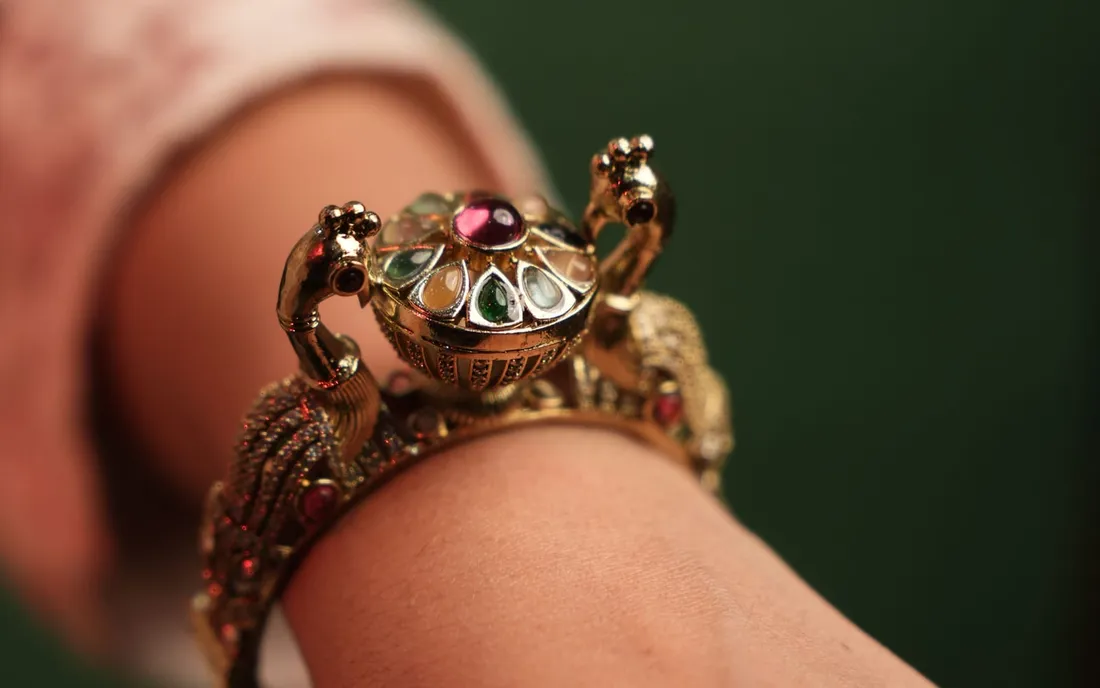
Gold-plated jewellery is base metal, usually brass or stainless steel, covered with a thin layer of real gold applied by electroplating. Most pieces hold their colour for six months to three years. The single biggest factor is how thick that gold layer is, measured in microns: thick plating over a good base metal lasts years, while flash plating fades in months.
If you have ever bought a gold-tone chain that looked beautiful for one season and patchy by the next, thickness is the number nobody printed on the label. Here is what the terms on a product page actually mean, and how to buy a piece that keeps its shine.
What is gold-plated jewellery, exactly?
A gold-plated piece has three parts:
- The base metal. Usually brass (a copper and zinc alloy) or stainless steel, occasionally a mixed alloy. This gives the piece its weight, shape and strength.
- The gold layer. Real gold or a gold alloy, bonded to the base electrically in a plating bath. It is measured in microns, one micron being a thousandth of a millimetre.
- The protective finish (on better pieces). A clear sealing coat, often called an e-coating, or a hard PVD layer, sitting over the gold to slow wear and oxidation.
The gold you see is genuine. It is simply a coating rather than the whole piece, which is why a gold-plated chain costs a few hundred rupees and a solid gold one costs lakhs. If the difference between plated, imitation and real jewellery is still fuzzy, our guide to artificial vs imitation vs real jewellery breaks down every term you will meet while shopping.
How thick is the gold layer, and why does it matter?
Thickness is the whole story. Every day of wear rubs a little gold away, so more microns means more material to wear through before the base metal shows.
US Federal Trade Commission rules set the floor for what may be called what. Under 16 CFR 23.3, a piece may be described as “gold electroplate” only if the plating is at least 10 karat fineness and has a minimum thickness throughout equivalent to 0.175 microns of fine gold. To be called “heavy gold electroplate”, the same rules require a minimum of 2.5 microns. India has no equivalent labelling standard for plated fashion jewellery, so these are the benchmarks worth judging a seller against.
Anything under 1 micron is what the trade calls flash plating. As jewellery platform Finematter puts it, “plating from 1 micron and up is deemed good quality, under 1 micron is mostly referred to as flash plating and is not part of our offering, as the quality is too low.”
| Plating thickness | Common label | Realistic life with regular wear |
|---|---|---|
| Under 1 micron | Flash plated, gold washed | Weeks to a few months |
| Around 1 micron | Standard gold plated | 1 to 2 years, best on earrings |
| 2 microns | Good quality plating | About 2 years on earrings and necklaces |
| 3 microns and up | Heavy plating | 2 to 3 years, holds up on rings and bracelets |
Wear estimates above follow Finematter’s replating guidance. Notice the pattern: earrings and pendants last longest because they barely touch anything. Rings and bracelets rub against hands, bags and desks all day, so they need the thickest plating you can get.
Gold plated vs gold filled vs vermeil vs solid gold: what is the difference?
These four words describe four very different amounts of gold, and shops use them loosely. The legal definitions are precise.
| Term | What it means | Typical life |
|---|---|---|
| Gold flashed / gold washed | An extremely thin gold coat, under 0.175 microns | Weeks to months |
| Gold plated / gold electroplate | At least 10 karat gold, minimum 0.175 microns, applied electrically | 6 months to 2 years |
| Heavy gold electroplate | Same process, minimum 2.5 microns of fine gold | 2 to 3 years or more |
| Vermeil | At least 10 karat gold, minimum 2.5 microns, over a sterling silver base | 2 to 3 years or more |
| Gold filled / rolled gold plate | Gold mechanically bonded to the base, at least 1/20th of the item’s metal weight for “gold filled” | Many years |
| Solid gold | Gold alloy throughout, marked by karat (22K, 18K, 14K) | Lifetime |
The vermeil rule comes from 16 CFR 23.4, which requires a sterling silver base plated on all significant surfaces with at least 10 karat gold to a minimum thickness of 2.5 microns; the gold filled weight fractions come from 16 CFR 23.3.
One thing to be clear about: only the last row is hallmarked gold. In India, BIS hallmarking became mandatory for gold jewellery from 16 June 2021, and it certifies the purity of solid gold. A plated piece is fashion jewellery, and should be priced and enjoyed as such.
Does gold-plated jewellery tarnish or turn your skin green?
Gold itself does not tarnish. The problem starts when the plating wears thin enough for the base metal to meet sweat, air and moisture. Copper in a brass alloy then oxidises, which is what dulls the piece and can leave that familiar green mark on skin.
So the practical question is not “will the gold tarnish” but “how long before the base metal is exposed”. Three things decide it:
- Plating thickness, as above.
- The base metal. Stainless steel underneath stays stable even where plating thins; raw brass reacts quickly, since brass is roughly two thirds copper.
- Whether there is a protective coat on top. A sealed anti-tarnish finish puts a barrier between the metal and the air. Harder PVD coatings measure roughly 800 to 2000 HV against 100 to 200 HV for ordinary gold plating, per TTT Jewelry, which is why coated pieces survive daily wear so much better.
If your skin reacts even when the plating looks intact, the culprit is usually nickel in the alloy rather than the gold. Our post on artificial jewellery and sensitive skin explains how to spot and avoid it.
What makes gold plating wear off faster?
In Indian conditions, humidity and sweat do most of the damage. The usual accelerators:
- Water and steam: showers, dishes, pools, monsoon damp.
- Sweat, which is salty and slightly acidic, especially in summer.
- Perfume, deodorant and lotions applied after the jewellery goes on.
- Friction, from rings knocking against keys, bag handles and keyboards.
- Loose storage, where pieces scratch each other in a box or pouch.
- Harsh cleaning, including toothpaste, baking soda and ultrasonic cleaners.
How do you make gold-plated jewellery last longer?
The habits are small and they roughly double the life of a finish:
- Last on, first off. Put jewellery on after perfume, makeup and hair products, and take it off before you shower, cook or sleep.
- Wipe it down after wear. A soft dry cloth removes the sweat and oils that sit on the surface overnight.
- Store it dry and airtight. A pouch or a zip bag with the air pressed out, kept away from the bathroom.
- Give pieces a rest. Rotating a few favourites spreads the wear instead of concentrating it on one chain.
- Never scrub. Warm water, a drop of mild soap and a soft cloth, and only when needed.
Our full care guide for anti-tarnish and artificial jewellery has the complete routine, including how to travel with pieces.
Is gold-plated jewellery worth buying?
Yes, for the right reasons. You are buying design, weight and finish, not gold as an asset. A well-made plated piece at a few hundred to a couple of thousand rupees, worn twice a week for two years, costs a few rupees per wear and looks like far more expensive jewellery the whole time. A cheap flash-plated version of the same design costs less once and then costs again every few months.
Before you buy, check for four things:
- The base metal is named, ideally brass or 316L stainless steel.
- The plating or coating is described, not just “gold colour”.
- The brand talks in months and years of colour retention, not “never fades”.
- There is a fair returns window, which is what a brand offers when it trusts its own finish.
The short version
Gold-plated jewellery is real gold over base metal, and it lasts as long as the gold layer does: months at flash-plating thickness, two to three years or more at 2 to 3 microns with a protective coat and sensible care. Buy for the thickness and the base metal rather than the photograph, keep it dry, and a plated piece will outlast most of what is in your jewellery box.
Good to know
Frequently asked questions
How long does gold-plated jewellery last?
Most gold-plated jewellery keeps its colour for about six months to three years. Very thin flash plating, under 1 micron, can fade within months, while thicker plating of 2 to 3 microns over a good base metal, kept dry and stored well, commonly lasts two to three years or more.
Is gold-plated jewellery real gold?
The outer layer is real gold, but it is only a coating a few microns thick over a base metal such as brass or stainless steel. The piece is fashion jewellery, not solid gold, so it carries no BIS hallmark and has no resale gold value.
Does gold-plated jewellery tarnish or turn skin green?
The gold layer itself does not tarnish, but once it wears thin the base metal underneath is exposed to sweat, air and moisture, and that is what dulls, darkens or leaves a green mark. A sealed anti-tarnish coating over the plating delays this considerably.
What does 'micron' mean on a gold-plated product page?
A micron is one thousandth of a millimetre and describes how thick the gold layer is. Under US FTC rules, gold electroplate needs at least 0.175 microns of at least 10 karat gold, and 'heavy gold electroplate' needs at least 2.5 microns. More microns means more gold to wear through, so the finish lasts longer.
Can gold-plated jewellery be re-plated?
Yes. A jeweller can strip and re-plate most metal pieces, and it is common for rings and chains. It is worth doing for a piece you love, but the cost of re-plating inexpensive fashion jewellery often approaches the price of a new well-made piece, so buying thicker plating up front is usually better value.