
Pearls
Freshwater Pearl Jewellery: The Complete Guide
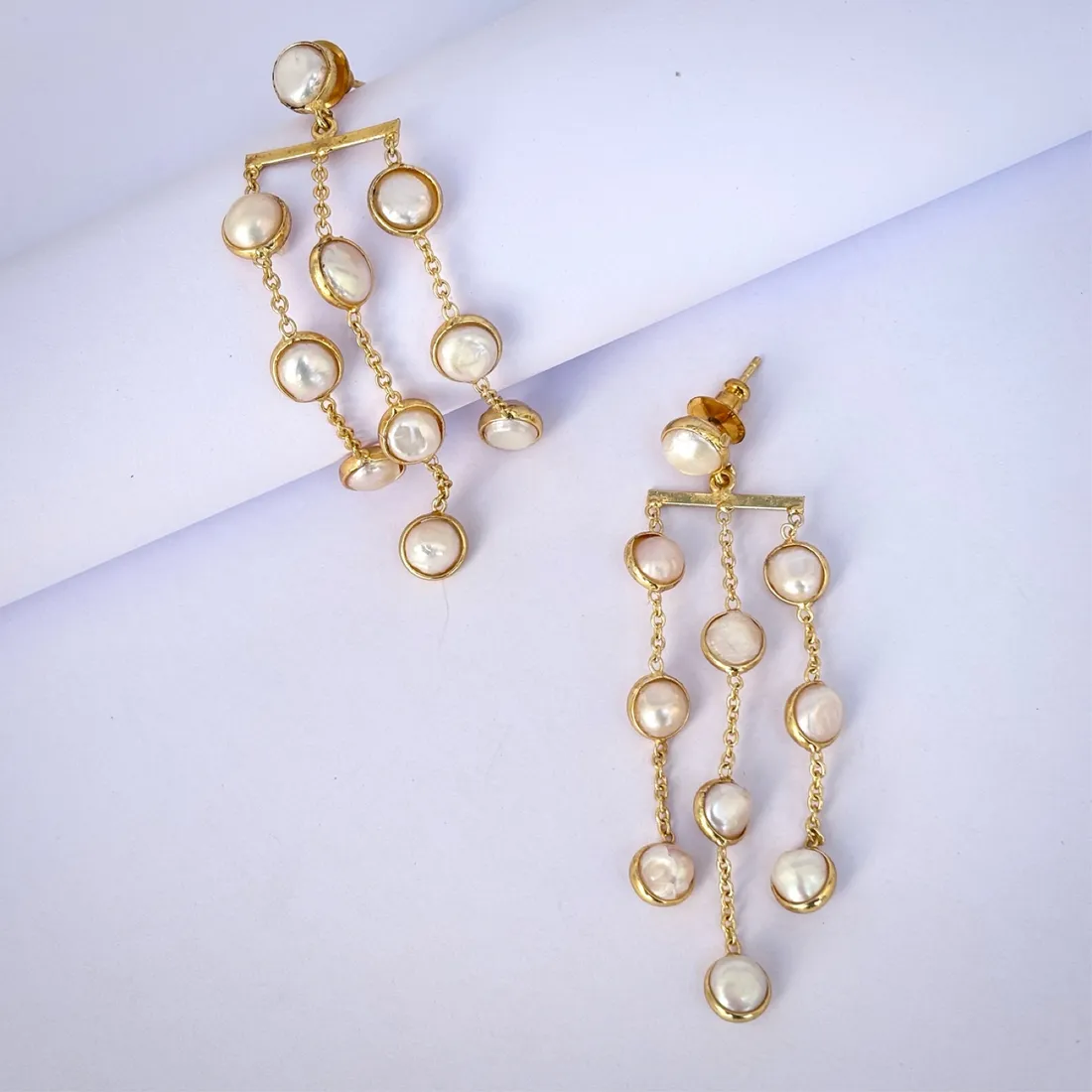
Freshwater pearls are real, genuine pearls grown inside freshwater mussels, affordable, surprisingly durable, and about as timeless as jewellery gets. They’re the reason a single strand works with jeans and a wedding saree. If you’ve wondered whether they’re “real”, how to spot a fake, or how to keep them glowing, here’s everything in one place.
Pearls are the heart of House of Tiara, so this is the guide we most wanted to write. Let’s start with the question everyone asks.
Are freshwater pearls real?
Yes, completely. Freshwater pearls are real pearls, made of the same nacre as any pearl in the world. They’re cultured, which simply means a pearl farmer gently starts the process by placing a small piece of tissue inside a freshwater mussel; the mussel then does the real work, layering nacre over months or years. The pearl that comes out is genuine.
“Cultured” is not the opposite of “real”. Almost every pearl sold today, freshwater or saltwater, is cultured. The opposite of real is imitation (glass, plastic or shell beads made to look like pearls).
So a freshwater pearl is a real pearl that’s simply more affordable, because mussels can grow several pearls at once, in ponds and lakes rather than the open sea.
Freshwater vs Akoya vs South Sea: which is which?
All are real pearls; the differences are shape, size, price and origin:
| Type | Grown in | Known for | Price |
|---|---|---|---|
| Freshwater | Mussels (lakes, ponds) | Best value, widest range of shapes & colours | Most affordable |
| Akoya | Saltwater oysters | Very round, high shine, classic white | Premium |
| South Sea / Tahitian | Large saltwater oysters | Big sizes, gold or black tones | Luxury |
For everyday elegance at a sweet price, freshwater is the sweet spot, which is exactly why it’s the pearl we build around.
How to tell a real pearl from a fake
A few quick, at-home checks:
- Temperature: real pearls feel cool for the first second against your skin; imitation glass and plastic feel room-temperature or warm.
- Surface: real pearls have tiny irregularities and a soft, deep glow; fakes look uniformly perfect and glassy.
- The gentle “tooth” test: rubbed lightly against the edge of a tooth, real pearls feel faintly gritty; fakes feel smooth.
- Matching: on a real strand, no two pearls are identical. Flawless, identical “pearls” are usually imitation.
How to style freshwater pearls
Pearls are the great outfit-finisher because they flatter everyone and everything:
- Everyday: a single pearl stud or a delicate pearl drop with a kurta, shirt or tee, quiet polish.
- Office: small pearl studs read beautifully on camera and in meetings (more in our office jewellery guide).
- Festive & occasions: layer pearls with gold-tone pieces for weddings, Diwali or Karva Chauth, see the festive jewellery guide.
- By outfit colour: pearls are close to foolproof, but they’re especially lovely with white, cream, black, pastels and blush. Our outfit-pairing guide has the full colour map.
How to care for pearls
Pearls are softer than metal and gemstones, so they ask for a little gentleness, and reward it with years of glow:
- On last, off first. Pearls dislike perfume, hairspray and lotion; put them on after everything else has dried. This is the single most important habit.
- Wipe after wearing. A soft, dry cloth removes the oils and sweat that dull nacre over time.
- Store soft and separate. Keep pearls in a soft pouch, away from harder pieces that can scratch them, never loose in a box with metal jewellery.
- Keep them out of water. Take pearls off before washing, swimming or bathing.
The same gentle routine that protects the metal protects the pearl, our full jewellery care guide covers both.
Pearl shapes and what they mean
Freshwater pearls come in more shapes than the classic round, and each has its own charm:
| Shape | Look and use |
|---|---|
| Round / near-round | The classic; most formal, most in demand |
| Oval / drop | Elegant for earrings and pendants |
| Baroque | Irregular and artistic; every piece unique |
| Rice / potato | Small and casual; lovely for everyday strands |
| Coin / keshi | Flat or freeform; modern and statement-friendly |
Rounder and more even usually means pricier, but a baroque or keshi pearl can be far more interesting, and more affordable, for everyday pieces.
How pearls are judged for quality
You do not need a lab to size up a pearl. Four things matter most:
- Luster: the deep, mirror-like glow. This is the single biggest sign of quality.
- Surface: fewer spots and bumps is better, though tiny marks prove it is real.
- Shape: rounder is rarer for classic pieces; character shapes have their own appeal.
- Size: larger pearls take longer to grow, so they cost more.
Of these, luster is the one to prioritise. A smaller, rounder pearl with a strong glow looks richer than a big, dull one.
Real or imitation, one more test
Beyond the cool-to-the-touch and gentle tooth tests, look closely at a strand in good light. Real pearls vary subtly in shape, size and surface, and no two are identical. If every pearl is flawless and perfectly matched, it is almost certainly glass or plastic. That small imperfection is not a flaw, it is proof you are wearing something a mussel actually grew.
The bottom line
Freshwater pearls are real pearls, the most affordable and versatile kind, and genuinely built to last with a little care. They suit every person, every age and nearly every outfit, which is why we believe every jewellery box should hold at least one. Start with a pair of studs or a single strand, and you’ll reach for them for years.
Good to know
Frequently asked questions
Are freshwater pearls real pearls?
Yes. Freshwater pearls are 100% real pearls, grown inside freshwater mussels (usually farmed in ponds and lakes). They're 'cultured', meaning the process is started by people, but the pearl itself is genuine nacre, the same material as any real pearl.
What's the difference between freshwater pearls and other pearls?
Freshwater pearls grow in mussels and are the most affordable and varied in shape; saltwater types like Akoya and South Sea are rounder and pricier. All are real pearls, freshwater simply offers the best value and the widest range of shapes and colours.
How can I tell if a pearl is real or fake?
Real pearls feel cool to the touch at first and have tiny surface irregularities; gently rubbed against each other or a tooth, they feel slightly gritty, while fake glass or plastic pearls feel smooth and warm. Real pearls also rarely match perfectly, small differences are a good sign.
Are freshwater pearls durable enough for regular wear?
Yes, with a little care. Pearls are softer than metal or gemstones, so they can scratch and dislike chemicals, but worn thoughtfully (on last, off first) and stored soft, freshwater pearls last for many years and even generations.
Do pearls suit everyone?
Pearls are one of the most universally flattering things you can wear, they sit close to the skin and their soft glow complements every skin tone, age and outfit, from jeans to a saree. It's why every jewellery box deserves at least one pearl piece.
Are baroque pearls real pearls?
Yes. Baroque simply means an irregular, non-round shape. Baroque freshwater pearls are 100% real pearls, often more affordable than round ones, and prized for giving every piece a one-of-a-kind look.