Skin Safety
Is Artificial Jewellery Safe for Sensitive Skin?

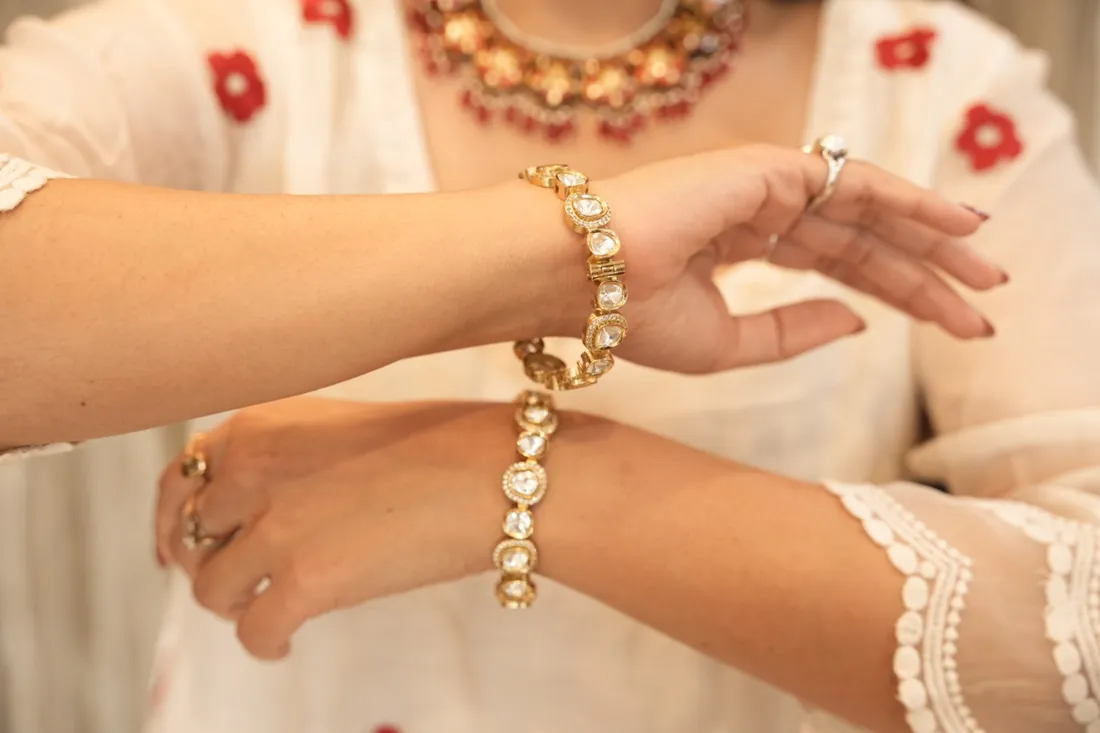
For most people with sensitive skin, artificial jewellery is safe to wear, if it’s nickel-free and has a good protective coating. The itchy, red, sometimes weepy reaction people blame on “cheap jewellery” is almost never about fashion jewellery as a category. It’s about one specific metal: nickel.
I started House of Tiara partly because so many women had quietly given up on everyday jewellery, convinced their skin “just couldn’t handle it.” Usually their skin was fine. The jewellery was the problem, and it was fixable. Here’s what’s actually going on, and how to choose pieces that won’t let you down.
The real culprit is nickel, not “artificial”
Nickel is the most common contact allergen there is. According to the Nickel Institute, up to 15% of women and about 2% of men are nickel-sensitive, and jewellery is one of the leading causes of exposure. A major clinical review in Contact Dermatitis similarly found nickel allergy affects a large share of the population, with a strong female predominance, linked to patterns like ear piercing and contact with nickel-releasing jewellery.
If jewellery makes your skin itch, redden or break out, the likeliest reason is nickel allergy, not “sensitive skin” and not fashion jewellery in general.
This is exactly why regulators treat nickel specially. The EU restricts how much nickel an item in prolonged skin contact is allowed to release, to under 0.5 micrograms per square centimetre per week, precisely because nickel-releasing jewellery is such a common trigger, per the Nickel Institute.
Why coating matters as much as metal
Here’s the part most people miss: a good anti-tarnish coating doesn’t just keep jewellery shiny, it puts a barrier between the base metal and your skin. Less direct metal contact means less of whatever the metal would otherwise release.
That’s why a well-made, well-coated piece is usually kinder to skin than a raw, uncoated one of the same metal. It’s also why a scratched or worn-through coating can start causing reactions on a piece that was fine for months, the barrier has broken down. (If that’s happening, our care guide covers how to keep coatings intact.)
How to choose skin-friendly artificial jewellery
A short checklist that removes most of the risk:
- Look for “nickel-free” and “skin-friendly”, stated plainly. A brand that has done the work will say so.
- Prefer named bases with real coatings. Brass or 316L stainless steel with an anti-tarnish or e-coating are dependable choices.
- Be cautious with “german silver”. Despite the name, german silver (nickel silver) contains nickel, see our materials guide for the full breakdown of what each label means.
- Mind the earrings especially. Pierced ears are broken skin, so they’re the most sensitive contact point, this is where nickel-free matters most.
- Patch-test new pieces. Wear something for a few hours, and watch the spot for a day. Cheap and reliable.
What “hypoallergenic” actually means (and doesn’t)
“Hypoallergenic” is a helpful signal, but it isn’t a legal guarantee, it means less likely to cause a reaction, not cannot. There’s no single certification behind the word. So treat it as a starting filter, then look for the specific claim that matters: nickel-free. A piece that names its base metal and states nickel-free tells you far more than “hypoallergenic” alone.
Other metals that can irritate, beyond nickel
Nickel causes the vast majority of jewellery reactions, but a few others matter for very sensitive skin:
- Cobalt, sometimes found alongside nickel in alloys; a smaller but real cause of contact allergy.
- Copper, rarely a true allergen, but on some skin it (and uncoated brass, which contains copper) can leave a harmless green mark. A coating solves this.
- Low-quality solder, the join points on cheap pieces can contain reactive metals even when the main body doesn’t.
The common thread: a good coating and a named, quality base metal protect you from almost all of these.
Earrings and pierced ears need the most care
Pierced ears are, in effect, broken skin with metal sitting in it, so they’re the single most sensitive contact point on the body. For earrings specifically:
- Insist on nickel-free posts; this is where reactions show up first and worst.
- For freshly pierced or healing ears, be extra conservative and give the coating no chance to be the problem.
- If only your earlobes react while rings and bracelets are fine, that’s a classic sign it’s the earring posts, switch to nickel-free and the problem usually disappears.
If you have a diagnosed nickel allergy
If a dermatologist has confirmed a nickel allergy, be stricter: wear only pieces explicitly labelled nickel-free, keep coatings intact, and take jewellery off if skin gets sweaty or wet for long stretches (sweat increases metal release). Many people with nickel allergy wear artificial jewellery happily for years, they’re just deliberate about what they choose.
(This is general information, not medical advice. For a persistent or severe skin reaction, see a dermatologist, a patch test can confirm exactly what you’re reacting to.)
The takeaway
“Is artificial jewellery safe for sensitive skin?” is really the wrong question. The right one is: is this piece nickel-free and properly coated? Get those two things right and beautiful, affordable jewellery becomes something you wear every day, not something your skin has to recover from.
Good to know
Frequently asked questions
Is artificial jewellery safe for sensitive skin?
For most people, yes, provided the piece is nickel-free and has a good protective coating. The reactions people blame on 'artificial jewellery' are almost always caused by nickel in cheap alloys, not by fashion jewellery as a whole.
What causes the itchy, red reaction from jewellery?
Usually nickel allergy, the most common contact allergy there is. Up to about 15% of women and 2% of men are sensitive to nickel, and jewellery is a leading cause. A good anti-tarnish coating helps by keeping the metal off your skin.
Which artificial jewellery is best for sensitive skin?
Look for pieces described as nickel-free and skin-friendly, with a proper anti-tarnish or e-coating. Brass and 316L stainless steel bases with quality coatings are dependable; be cautious with 'german silver' (nickel silver), which contains nickel.
Is anti-tarnish jewellery better for sensitive skin?
Generally yes. The protective coating that stops tarnish also creates a barrier between the base metal and your skin, which reduces the metal contact that triggers reactions, as long as the coating is intact.
How can I test if a piece will irritate my skin?
Do a simple patch test: wear the piece for a few hours on a small area and watch for redness or itching over a day or two. If you have a diagnosed nickel allergy, stick to pieces explicitly labelled nickel-free.