Buying Guides
What Is Rough Stone Jewellery? Why Every Piece Is One of a Kind
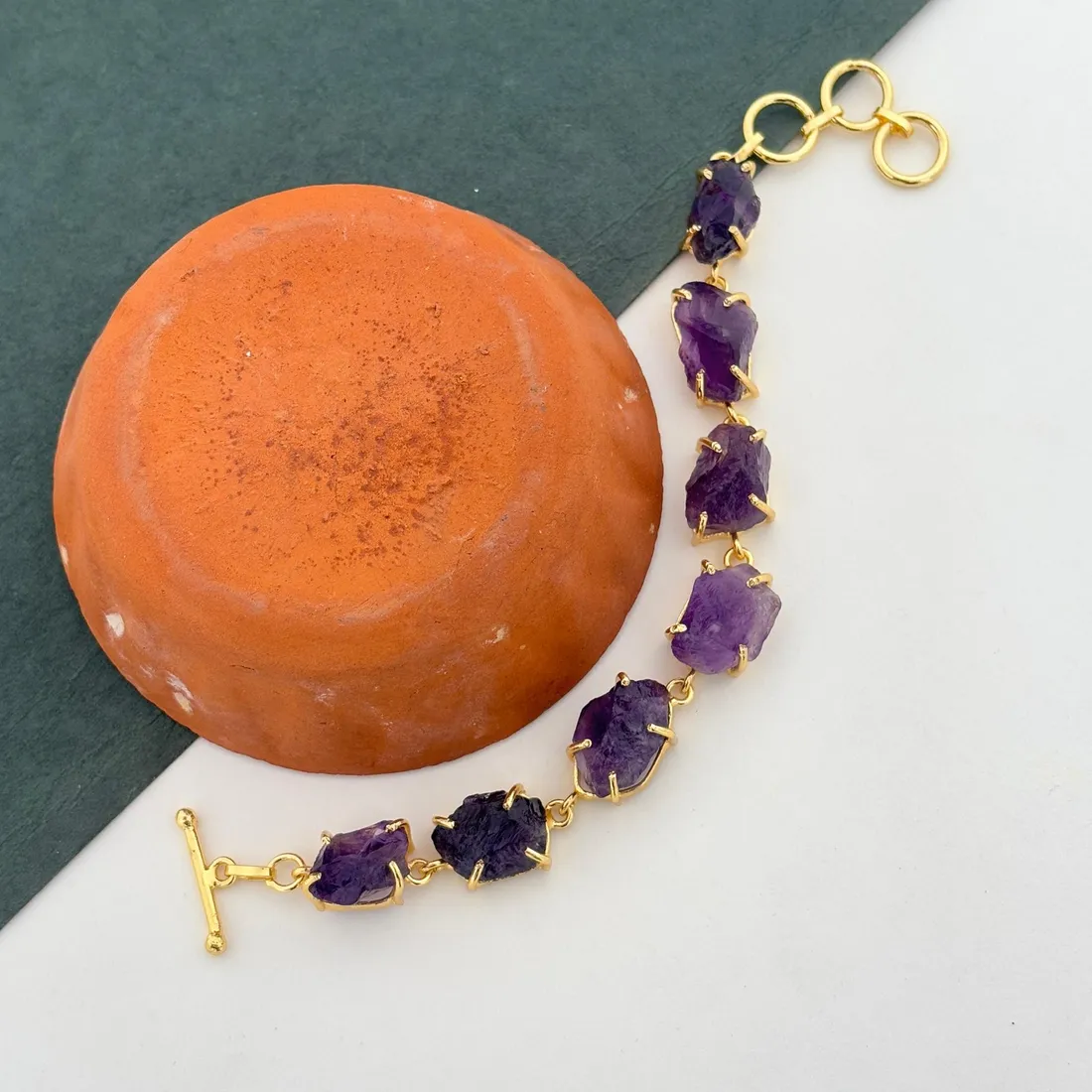
Rough stone jewellery uses stones set in their natural, uncut state, exactly as they came out of the earth, instead of being faceted and polished. Because the shape, colour and inclusions are formed by geology and never repeated, every finished piece is genuinely one of a kind. Here is what you are buying, and how to wear it well.
What exactly is rough stone jewellery?
A rough stone (also called a raw or uncut stone) is one that has not been cut into facets or given a mirror polish. What you see is the crystal itself: uneven faces, natural colour banding, tiny inclusions, sometimes a sparkling crust of crystal points.
Faceted gems are engineered. A cutter grinds precise angles so light bounces back at you. Rough stones are the opposite idea: the surface is whatever the earth produced, so the light behaves in a softer, more scattered way. You lose the flashy sparkle and gain texture and character.
Why is every rough stone piece different?
Because every stone grew in its own conditions. Gem minerals crystallise from cooling magma, from hot mineral-rich fluids moving through cracks, or by recrystallising under heat and pressure inside existing rock, as GIA’s review of gems formed in magmatic rocks sets out. Temperature, pressure, trace elements and the space available all differ, so no two crystals grow to the same shape or shade.
When a maker cuts and facets a stone, that individuality is polished away on purpose so that ten stones can match. When the stone is left rough, it stays. That is why rough stone jewellery is sold as a design rather than as an exact item:
The photo shows the design. The stone you receive is its own stone.
This matters most for earrings. Two rough stones on the same pair will not be twins, and a well-made pair balances them by size and weight instead of pretending they are identical.
What are the main types of rough stone used in jewellery?
“Rough” covers several looks, and knowing the vocabulary makes shopping much easier. The International Gem Society’s guide to raw stone jewellery design and care groups them broadly like this:
| Type | What it looks like | Wears best as |
|---|---|---|
| Druzy | A crust of tiny sparkling crystals over a base stone | Earrings, pendants, statement rings |
| Terminated crystal | A single crystal with a visible point, often quartz | Drop earrings, pendants |
| Water-worn rough | Tumbled, softened edges from river or beach wear | Everyday pieces, bracelets |
| Sliced stone | A cross section, like a geode or agate slice, flat with a raw rim | Statement earrings, pendants |
| Raw chunk | An unshaped fragment set as found | Bold cocktail pieces |
Druzy and sliced stones give the most drama for the least weight, which is why they turn up so often in waterfall and chandelier earrings.
Is uncut stone jewellery actually new?
Not in India. The most famous uncut stone in Indian jewellery is polki, the natural uncut diamond used in kundan and jadau work, which rose to prominence under the Mughal courts and is still worn at weddings today, as Only Natural Diamonds explains in its guide to polki. The whole appeal of polki is the same appeal rough stone jewellery trades on: the stone is left as it was found, so no two are alike.
So when a rough stone piece looks unusual next to a row of matched, faceted stones, it is not breaking a rule. It is following an older one.
Are the stones in rough stone fashion jewellery real?
Sometimes yes, sometimes no, and you are entitled to ask. In fashion jewellery, a “rough stone” can be:
- Genuine natural rough, commonly quartz, agate, amethyst or druzy, which are abundant and inexpensive in raw form.
- Dyed or treated natural stone, where the material is real but the colour is enhanced.
- Glass, resin or a moulded lookalike shaped to read as raw stone.
None of these are dishonest by themselves. What matters is that the seller describes the piece accurately and prices it accordingly. A certified gemstone costs what a certified gemstone costs; a styled fashion piece should not be sold as one. If a listing will not say what the stone is, treat it as a lookalike. Our guide to artificial vs imitation vs real jewellery breaks down the rest of the vocabulary sellers use.
The metal deserves the same scrutiny. A raw stone set in a base metal that tarnishes in a month is a short-lived piece however beautiful the stone is, which is why the setting should be anti-tarnish and, if your skin reacts easily, skin-friendly too.
Can you wear rough stone jewellery every day?
Yes, with two sensible choices: the right stone and the right setting.
Hardness on the Mohs scale measures resistance to scratching, not resistance to breaking, and the International Gem Society points out that even household dust contains quartz, so any stone softer than quartz gets slowly dulled just by being wiped and worn. Quartz and agate sit at roughly 7 and take daily life well. Softer, more porous stones do not.
The setting matters just as much. A bezel wraps metal around the edge of the stone and protects it, which is the standard advice for raw stones with vulnerable points and edges. Prongs look lighter but leave sharp natural edges exposed to knocks.
Practical rules:
- Earrings and pendants take less abuse than rings. Hands hit everything; ears do not.
- Put jewellery on last and take it off first, after perfume, before workouts, showers and swimming.
- Keep pieces apart in storage so a hard rough edge does not scratch a softer neighbour.
How do you clean and store rough stone jewellery?
Gently. A rough surface has crevices that trap dust, sweat and lotion, so it needs cleaning more often than a polished stone, but with less force. Use a soft brush, lukewarm water and mild soap, then dry the piece completely before storing it. Avoid ultrasonic cleaners, steam and household chemicals, all of which can loosen glue-set stones or attack a treated surface.
Storage is where most fashion jewellery is won or lost: dry, airtight, and separated. The full method is in our guide to caring for anti-tarnish and artificial jewellery, and it applies here with one addition, which is to keep rough pieces away from anything they could scratch.
How do you style rough stone jewellery?
Treat the stone as the loudest thing in the outfit and let everything else stay quiet.
- With plain fabric, solid cotton, linen, black, ivory. Busy prints fight the texture.
- As the only statement piece, big rough stone earrings plus a bare neckline, or a raw pendant with small studs.
- With ethnic and indo-western looks, raw stones sit beautifully next to oxidised and antique finishes.
- Layered carefully, one raw element per layered stack, not three.
Our guide to pairing jewellery with your outfit has the balance rules in full.
What should you check before buying?
Five questions worth asking any seller:
- What is the stone? Natural rough, treated, or a lookalike.
- Will mine look like the photo? Expect variation and expect it to be stated.
- What is the metal? Anti-tarnish and nickel-safe matters more than the stone in daily wear.
- How is the stone held? Bezel and secure claw settings outlast glue.
- What is the return policy on natural variation? A confident seller has a clear answer.
Rough stone jewellery is one of the few things you can buy that nobody else can own an exact copy of. Buy it for that, and buy the setting that will keep it wearable.
Good to know
Frequently asked questions
What is rough stone jewellery?
Rough stone jewellery uses stones in their natural, uncut state instead of faceted and polished gems. The stone is set exactly as it formed underground, keeping its raw edges, natural colour zones and crystal faces. Because that shape is made by geology and never repeated, every piece is unique.
Why does my rough stone piece look different from the photo?
Because it is a different stone. Product photos of rough stone jewellery show one example of the design, not the exact stone you receive. Variation in shape, size, colour depth and inclusions is the point of the category, not a defect. Good sellers say so clearly on the product page.
Is rough stone jewellery durable enough for daily wear?
It depends on the stone and the setting. Hardness on the Mohs scale measures scratch resistance, and everyday household dust contains quartz, so softer stones dull faster. Pieces in a protective bezel setting, worn as earrings or pendants rather than rings, hold up best.
Are the stones in rough stone fashion jewellery real?
Some are genuine natural rough such as quartz, agate or druzy, and some are glass, resin or dyed lookalikes. Fashion jewellery is not required to be certified, so ask the seller what the stone is. Treat any piece sold at a fashion price as a styled lookalike unless it is described specifically.
How do you clean rough stone jewellery?
Use a soft brush with mild soap and lukewarm water, then dry it completely. Rough surfaces trap dust and lotion in a way polished stones do not, so clean gently and often rather than harshly and rarely. Skip ultrasonic cleaners and harsh chemicals entirely.