Buying Guides
10 Jewellery Pieces Every Woman Should Own Before Turning 30
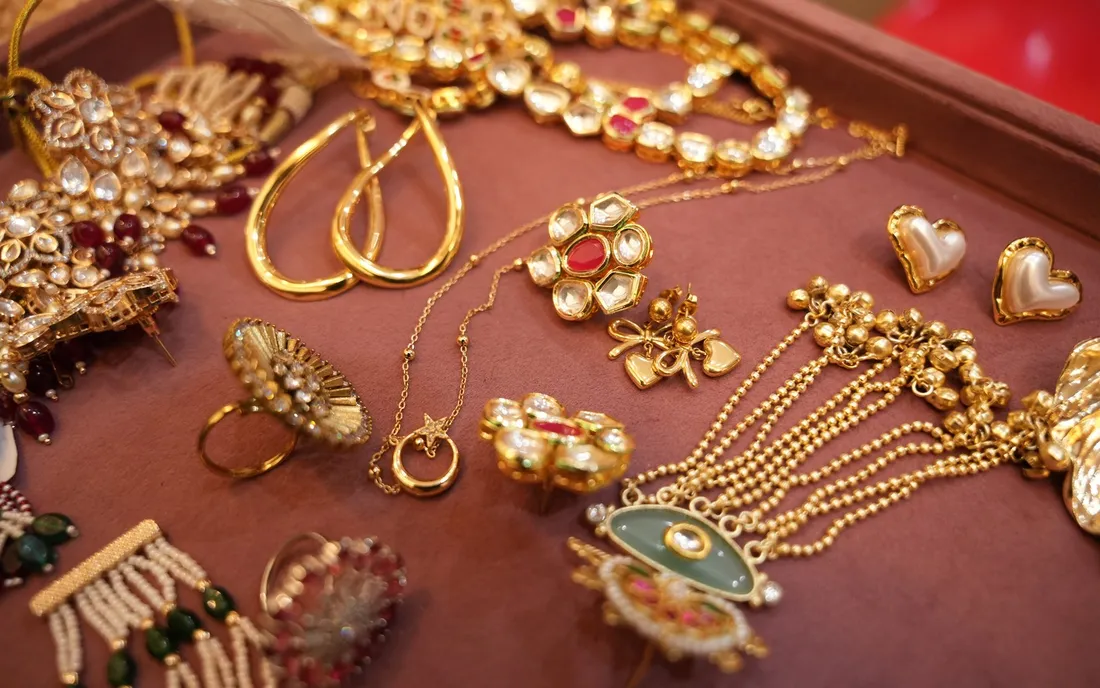
Ten pieces cover almost every occasion you will dress for: small studs, medium hoops, jhumkas, one statement earring, a thin chain, a pendant with meaning, pearls, a cuff or bangle, a stack of thin rings, and one oxidised silver piece. Buy them in skin-safe, anti-tarnish metal and they will outlast the trend cycle.
The point of a list like this is not to own more jewellery. It is to own less of it and wear all of it. Most of us have a drawer full of pieces bought for one outfit and never worn again. These ten are chosen the opposite way: each one pairs with several others, and each one earns its place across work, festivals and ordinary Tuesdays.
What jewellery should every woman own before 30?
Here is the full set, and the thing to check before you pay for each one.
| # | The piece | Why it earns its place | What to check before buying |
|---|---|---|---|
| 1 | Small studs | The default. Work, sleep, gym, hospital visits | The post material, named not vague |
| 2 | Medium hoops | Instant polish with a plain kurta or a shirt | Weight, and a hinge that clicks shut |
| 3 | Jhumkas | Every festival, every saree, every family function | Weight per ear, and a secure back |
| 4 | One statement earring | Carries a plain outfit on its own | That your ear can hold it for four hours |
| 5 | A thin chain, 16 to 18 inches | Layers with everything, wears alone | Clasp quality and solder points |
| 6 | A pendant with meaning | The piece people ask about | That it hangs straight, not sideways |
| 7 | Pearls, studs or a short strand | The most formal thing you own | Real freshwater or a good imitation, knowingly chosen |
| 8 | A cuff or a bangle | Balances a sleeveless or three quarter sleeve | Inner edge finish, no sharp seam |
| 9 | Thin stacking rings | Adds detail without adding noise | Band width, and a size that clears the knuckle |
| 10 | One oxidised silver piece | The whole different mood in one item | Even patina, no flaking on the raised parts |
Why do these ten pieces work harder than the rest?
Every piece on the list passes three tests.
- It goes with at least three things you already wear. A piece that only works with one lehenga is a costume, not a collection.
- You can wear it for a full day without thinking about it. Weight, post material and edge finish decide this, not design.
- The finish survives Indian weather. Sweat and humidity are what actually kill fashion jewellery, so the coating matters as much as the shape.
That third test is the one most buying guides skip. A sealed anti-tarnish finish puts a barrier between the metal and the air, which is the difference between a piece that still looks right in year two and one that looks tired by Diwali.
Which earrings belong in the first five?
Four of the ten are earrings, and that is deliberate: earrings are the piece people see on a video call, across a table and in every photograph.
- Small studs. Buy these first and spend the most care here. They are the pair you never take off, which means they have the most contact with your skin of anything you own.
- Medium hoops. A plain hoop in your usual metal tone is the fastest way to look finished. Hinged or click-top backs stay shut better than a friction post.
- Jhumkas. Non-negotiable in an Indian collection. One classic pair in gold tone covers weddings, pujas and every festive week of the year.
- One statement earring. A single dramatic pair does more for a plain black kurta than three medium pieces ever will. Wear it with nothing else and the outfit is done.
The post is the part to be fussy about. In a clinical study of 200 patients in Assam published in the Indian Journal of Dermatology, Venereology and Leprology, earrings tested positive for free nickel more often than any other jewellery item, roughly one in three, against 2 to 5 percent for rings, necklaces and chains. That paper also notes nickel sensitivity is more common in women, with an incidence of about 10 percent, and that India has no legal limit on nickel release in jewellery.
The UK and EU do have one. Under their rules, anything in direct and prolonged contact with skin must release no more than 0.5 micrograms of nickel per square centimetre per week, and a post inserted into a piercing must stay under 0.2 micrograms, measured by the standard test BS EN 1811. A coated piece qualifies only if that coating keeps release under the limit for at least two years of normal use, per UK Trading Standards guidance. Since no Indian rule requires this, the sensible move is to buy from brands that describe their metal and coating rather than ones that just say “alloy”. Our guide to artificial jewellery and sensitive skin covers how to test a piece you already own.
What necklaces do you actually need?
Three, and they do very different jobs.
- A thin chain, 16 to 18 inches. This is the workhorse. It sits at the collarbone, disappears under a collar, and is the base layer for everything else. Check the clasp: a spring ring that feels flimsy in the shop will fail in a month.
- A pendant that means something. An initial, a birth month stone, a symbol you actually like. This is the piece with a story, and it is the one people compliment.
- Pearls. A pair of pearl studs or a short strand is the most formal item most of us will ever need, and it reads as expensive across every dress code. Know what you are buying: freshwater cultured pearls are real pearls grown in mussels, and a good imitation is a fine choice too as long as it is a choice. Our freshwater pearl guide has the tests that tell them apart.
What about rings, bracelets and one piece that breaks the pattern?
- A cuff or a bangle. One good wrist piece finishes a sleeveless or three quarter sleeve outfit. Feel the inner edge before you buy: a sharp seam will catch on every sleeve you own.
- Thin stacking rings. Two or three narrow bands worn together add detail without competing with your earrings. They also let you scale up or down by simply wearing more or fewer.
- One oxidised silver piece. This is the deliberate outlier. Oxidised jewellery has a darkened, antique finish that sits completely differently against cotton, linen and handloom than anything gold tone does, which is why one piece changes your whole range. Start with a pair of earrings or a chunky ring, and see our oxidised silver guide for how to keep the patina even.
How much should you spend on each piece?
Cost per wear is the only number that matters. Split your budget by how often the piece will actually be on your body.
| Piece | Share of budget | Why |
|---|---|---|
| Studs, hoops, everyday chain | About half | Worn several times a week for years |
| Jhumkas, pearls, cuff | About a third | Worn often, but for occasions |
| Statement earring, stacking rings, oxidised piece | The rest | Fun, expressive, replaced more freely |
If a piece is plated, thickness decides how long the colour lasts. Under US Federal Trade Commission rules, something may be called “gold electroplate” with as little as 0.175 microns of gold, while “heavy gold electroplate” needs at least 2.5 microns. India has no equivalent labelling rule, so a brand that talks openly about its coating and its base metal is telling you something a price tag cannot.
How do you build the set without buying it all at once?
Buy in this order and you have a usable collection at every stage.
- Studs and a thin chain. Two pieces, and you are dressed for work every day.
- Medium hoops. Now you have an evening option.
- Jhumkas. You are ready for the festive calendar.
- Pearls and a cuff. Formal events are covered.
- Pendant, stacking rings, statement earring, oxidised piece. The personality layer, added slowly as you learn what you actually reach for.
Stick to one or two metal tones across the set, and everything mixes by default. If you are building specifically for a job, our office jewellery guide narrows the same idea down to a five piece work capsule.
The short version
Own ten pieces, not fifty: small studs, medium hoops, jhumkas, one statement earring, a thin chain, a meaningful pendant, pearls, a cuff, stacking rings and one oxidised silver piece. Judge each one on the base metal, the coating and the post rather than the photograph, keep to one or two metal tones, and buy the everyday pieces best. Do that before 30 and you spend the next decade wearing jewellery instead of shopping for it.
Good to know
Frequently asked questions
What jewellery should every woman own?
A working collection needs ten things: small studs, medium hoops, a pair of jhumkas, one statement earring, a thin chain of 16 to 18 inches, a pendant that means something to you, pearls, a cuff or bangle, a set of thin stacking rings, and one oxidised silver piece. Between them they cover work, weddings, festivals, dinners and ordinary weekdays.
How many pieces of jewellery do you need in a capsule collection?
Eight to twelve is the practical range. Fewer than eight and you start borrowing pieces that do not suit the outfit; more than twelve and most of the box sits unworn. Ten well chosen pieces in one or two metal tones will dress almost anything you own, because each piece pairs with several others rather than with one outfit.
Is artificial jewellery good enough for everyday wear?
Yes, if it is made properly. What decides daily wearability is the base metal and the coating, not the price. A sealed anti-tarnish finish over a stable base metal such as stainless steel or well plated brass keeps its colour through sweat and humidity, while uncoated cheap alloy dulls within weeks.
What jewellery is best for sensitive ears?
Look for earrings whose posts are described by material, ideally surgical stainless steel or a coated post, and avoid unnamed mixed alloy. In one Indian clinic study, earrings released free nickel more often than any other jewellery tested, so the post is the part to be fussy about. If your ears itch or weep with a particular pair, stop wearing them and switch to a coated or steel post.
How much should I spend on my first good jewellery pieces?
Think in cost per wear rather than sticker price. A well finished pair of studs worn three times a week for two years costs a rupee or two per wear, while a cheap pair replaced every three months costs more in a year and looks worse the whole time. Spend most on the pieces you wear daily, studs, hoops and your everyday chain, and least on the trend piece.